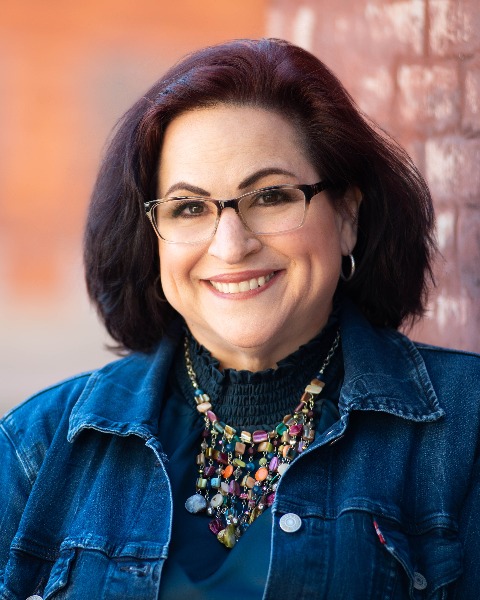
Abstract: Complex trauma profoundly shapes the body, emotions, and sense of self. Survivors often experience not only posttraumatic symptoms but also deep disruptions in identity, emotional regulation, and relationships. For many, eating disorders develop as a way of coping with overwhelming emotions, managing dissociation, or attempting to regulate a body that feels unsafe. Despite the strong association between complex trauma and eating disorders, treatment approaches often address them separately, leaving clients without fully integrated care.
This workshop offers a trauma-informed framework for treating eating disorders in the context of complex trauma and dissociation. Drawing on over twenty years of clinical experience, I will demonstrate how Dialectical Behavior Therapy (DBT), interpersonal effectiveness skills, and somatic grounding practices can be combined to create safety, strengthen emotion regulation, and restore connection to the body. Particular attention will be given to shame as a central feature of both trauma and eating disorders, and to strategies that support clients in developing self-compassion and embodied resilience.
Participants will learn practical interventions to use immediately in therapy, including guided body check-ins, somatic grounding techniques, and interpersonal scripts that address the relational impact of complex trauma. Clinical vignettes will illustrate how dissociation complicates eating disorder recovery and how trauma-informed strategies can help clients tolerate distress, reconnect with their bodies, and rebuild trust in themselves and others. Experiential exercises will give participants the opportunity to practice these techniques and reflect on how to adapt them to their own clinical settings.
This workshop aligns with the 2026 ISSTD conference theme—Past Perspectives, Future Horizons: Navigating Changing Currents of Complex Trauma and Dissociation—by bridging established interventions with innovative, integrative applications for complex trauma survivors who struggle with eating disorders. Participants will leave with concrete tools, a deeper understanding of the intersection of complex trauma and disordered eating, and greater confidence in applying trauma-informed approaches in their work.
Citation 1: Brewerton, T. D., & Brady, K. T. (2023). Eating disorders and trauma: A critical review of the literature. Journal of Trauma & Dissociation, 24(4), 467–485.
Citation 2 : Monteleone, A. M., & Treasure, J. (2021). Emotion dysregulation and eating disorders: State of the art and future directions. International Journal of Eating Disorders, 54(6), 879–892.
Citation 3 : Schmidt, U., & Treasure, J. (2016). Anorexia nervosa: Valued and visible. A cognitive-interpersonal maintenance model. British Journal of Clinical Psychology, 55(3), 243–264.
Citation 4: Brand, B. L., Lanius, R. A., Vermetten, E., Loewenstein, R. J., & Spiegel, D. (2022). Dissociation and trauma: Challenges and directions for future research. Journal of Trauma & Dissociation, 23(1), 1–18.
Citation 5 : Chen, E. Y., Matthews, L., Allen, C., Kuo, J. R., & Linehan, M. M. (2015). Dialectical behavior therapy for clients with binge-eating disorder or bulimia nervosa and borderline personality disorder. International Journal of Eating Disorders, 48(6), 678–693.
Learning Objectives:
At the conclusion of this session participants will be able to:
Describe the role of complex trauma and dissociation in the development and maintenance of eating disorders
Apply DBT-based interpersonal effectiveness strategies to improve relational functioning in survivors of complex trauma with eating disorders
Demonstrate two somatic grounding techniques that reduce body-based distress and support stabilization in clients with complex trauma
Analyze how shame operates as a barrier in recovery from complex trauma and eating disorders, and discuss strategies for addressing it
Integrate trauma-informed interventions into treatment plans for clients navigating both complex trauma and disordered eating